
The situation
A warehouse operator provides a storage-and-warehousing service to the Patronato Nacional de la Infancia (PANI), Costa Rica’s national child-welfare agency, under a public tender. A public contract means compliance has to be proven, not just delivered: an inventory count on demand every month, dispatch that respects expiry dates first, signed reports, and logs nobody can quietly edit after the fact.
Spreadsheets could show a number, but they couldn’t prove any of it — no dispatch discipline, no audit trail, no way to show an auditor that a report matches what actually happened in the warehouse.
What I built
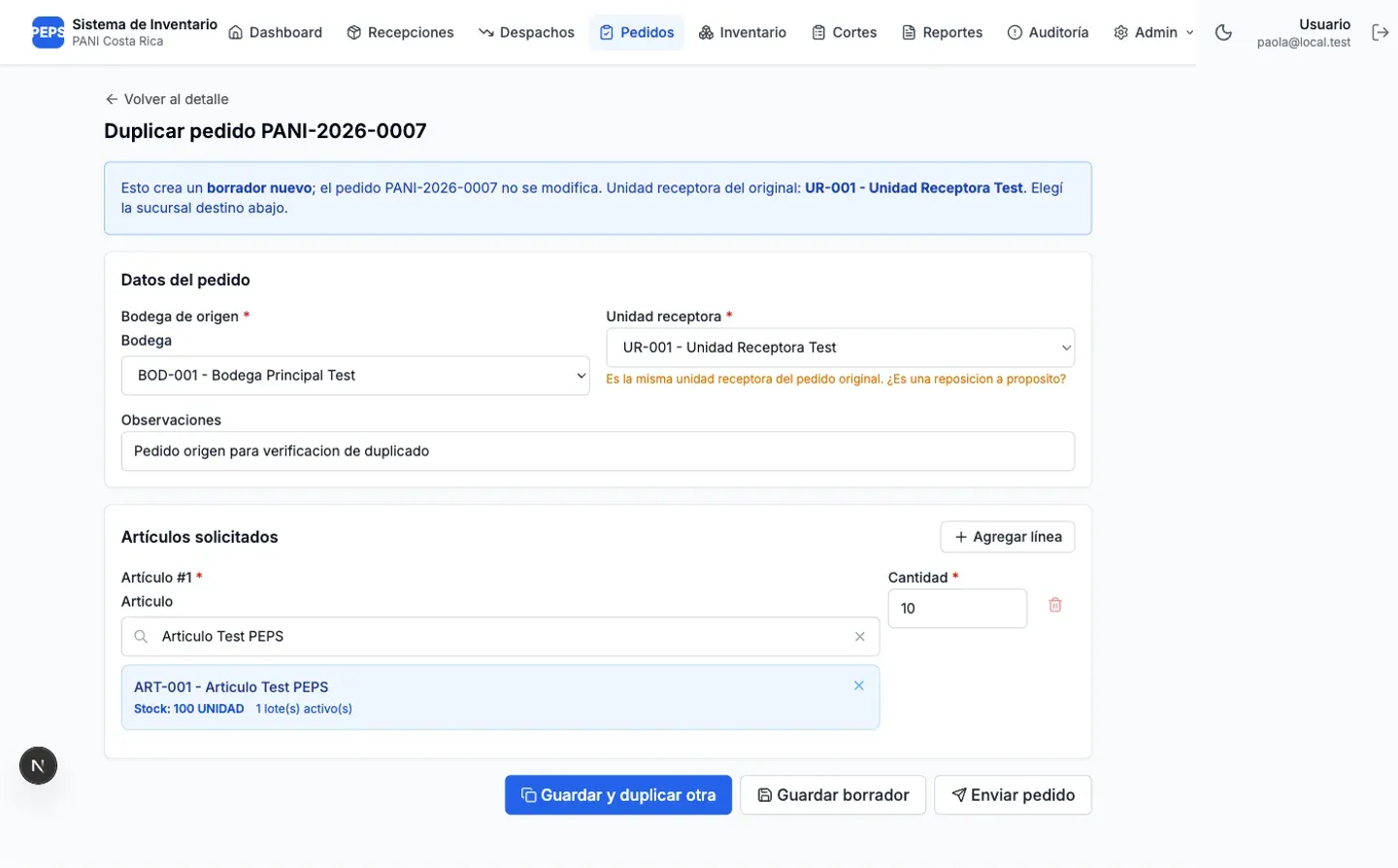
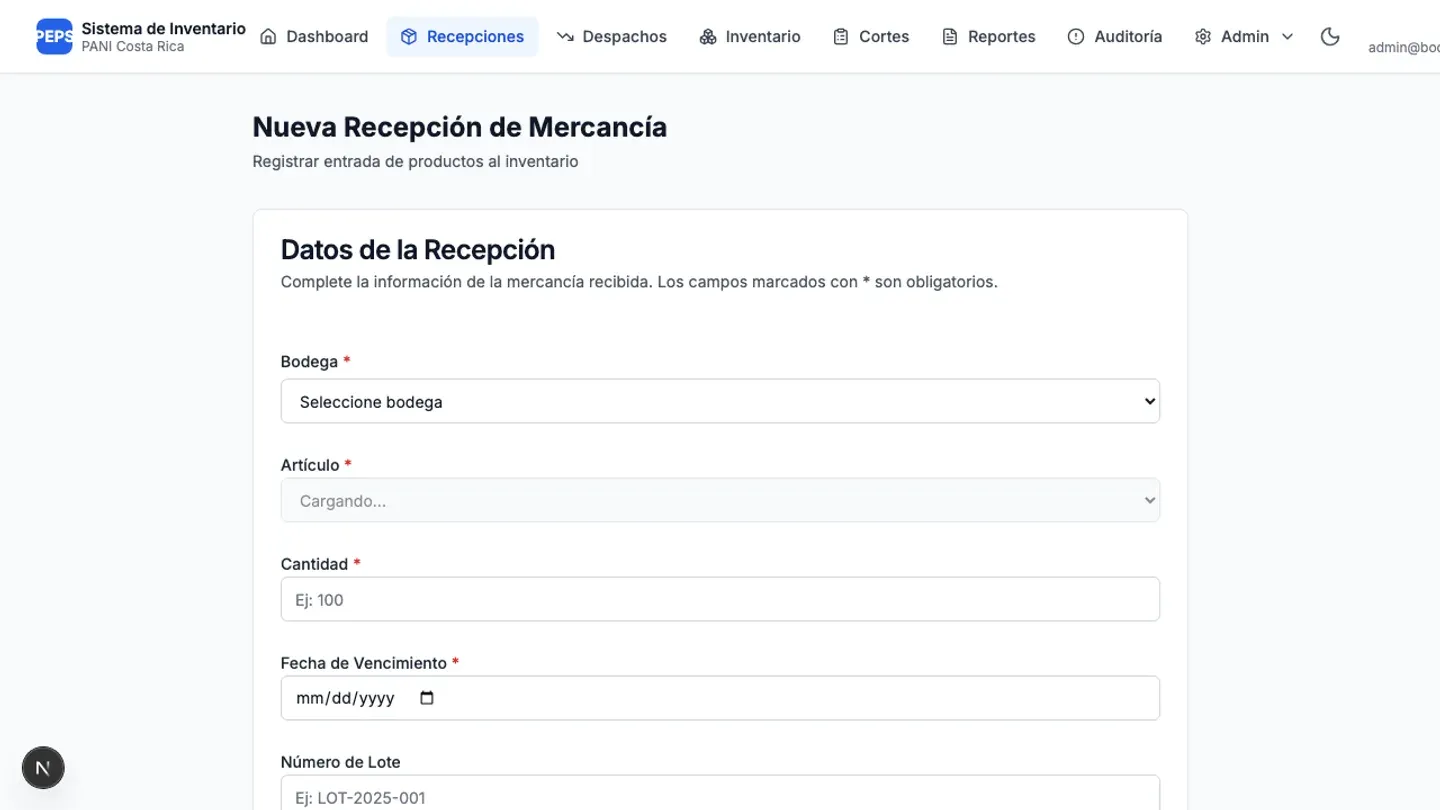
I designed and built the inventory and warehouse-control system from scratch: intake, dispatch, stock, storage locations and traceability, all around FEFO (first-expired, first-out) picking, so dispatch enforces expiry order instead of relying on staff to remember it.
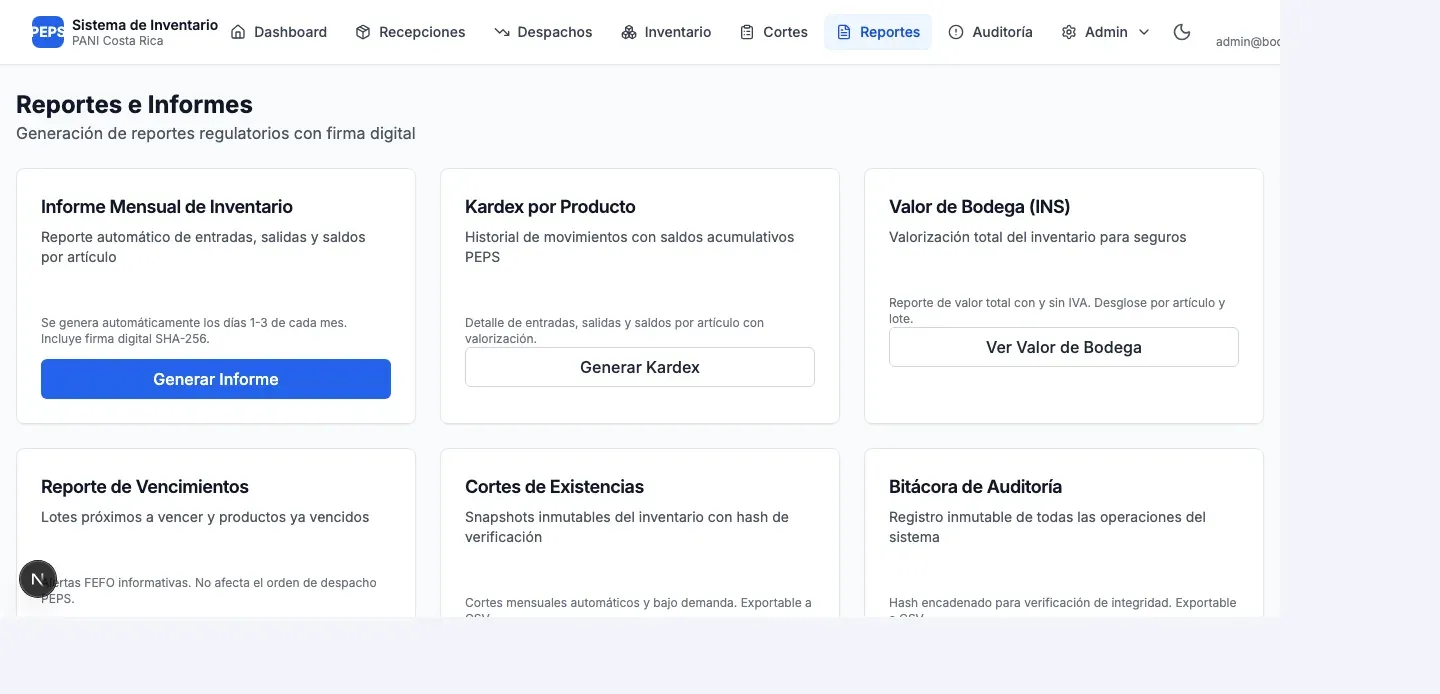
Cut-off reports close out each period as QR-coded, signed documents an auditor can verify independently. Underneath, every event writes to a hash-chained log — each entry cryptographically linked to the one before it, so an edit after the fact is detectable by construction, not by policy.
What happened
The operator passes its compliance checklist 7/7 with system evidence instead of manual reconstruction.
What used to mean pulling together spreadsheets, dispatch notes and someone’s memory of what happened is now a report the system produces on demand, backed by a log an auditor can trust because it can’t be quietly edited.